The Government has set the vision for NHS estates. The biggest challenge is delivering it.
By Hayley Smith – Health Strategy Lead, Darwin Group
Alongside the 10-Year Health Plan, the recently announced 10-Year Capital Plan sets out a vision for a modern healthcare estate that is safer, more productive and designed around patients, with investment in new hospitals, neighbourhood health centres, diagnostic capacity and the renewal of ageing infrastructure.
But setting out the ambition is one thing, knowing how best to deliver it whilst keeping services running is another.
The NHS is being asked to replace ageing buildings, tackle a multi-billion-pound maintenance backlog, expand capacity and shift care closer to home. And they have to do this whilst continuing to deliver safe, high-quality services every day and plan for major estate transformations? That is a very difficult balancing act.
For the NHS, transformation cannot come at the expense of operational resilience. Patients will still need care throughout every refurbishment programme, redevelopment project and service transformation.
For me, that means flexibility needs to be built into the estate strategies from the outset, rather than considered when a problem arises.
The question is no longer “What buildings do we have?”
It’s “Do we have the right space, at the right time, to keep services running while our estate evolves?”
A modern healthcare estate masterplan needs to balance today’s operational pressures with tomorrow’s transformation, creating the flexibility to respond to disruption, restore capacity and reimagine healthcare environments for the future.
Respond. building resilience when disruption strikes
Many trusts continue to operate from ageing buildings that are increasingly vulnerable to failure.
Water leaks, electrical faults, structural deterioration, flooding, fire, RAAC, seasonal pressures and unexpected service disruption are realities estates teams are dealing with. When something happens, the immediate priority is to keep services running and keep patients safe.
But resilience isn’t only about responding to emergencies. Much of the work needed to deliver the Capital Plan will involve enabling works, temporary decants and phased construction before long-term facilities are ready.
This is why I believe rapidly deployable modular facilities should form part of resilience and contingency planning within the wider estate masterplan, not just be seen as a solution when something goes wrong.
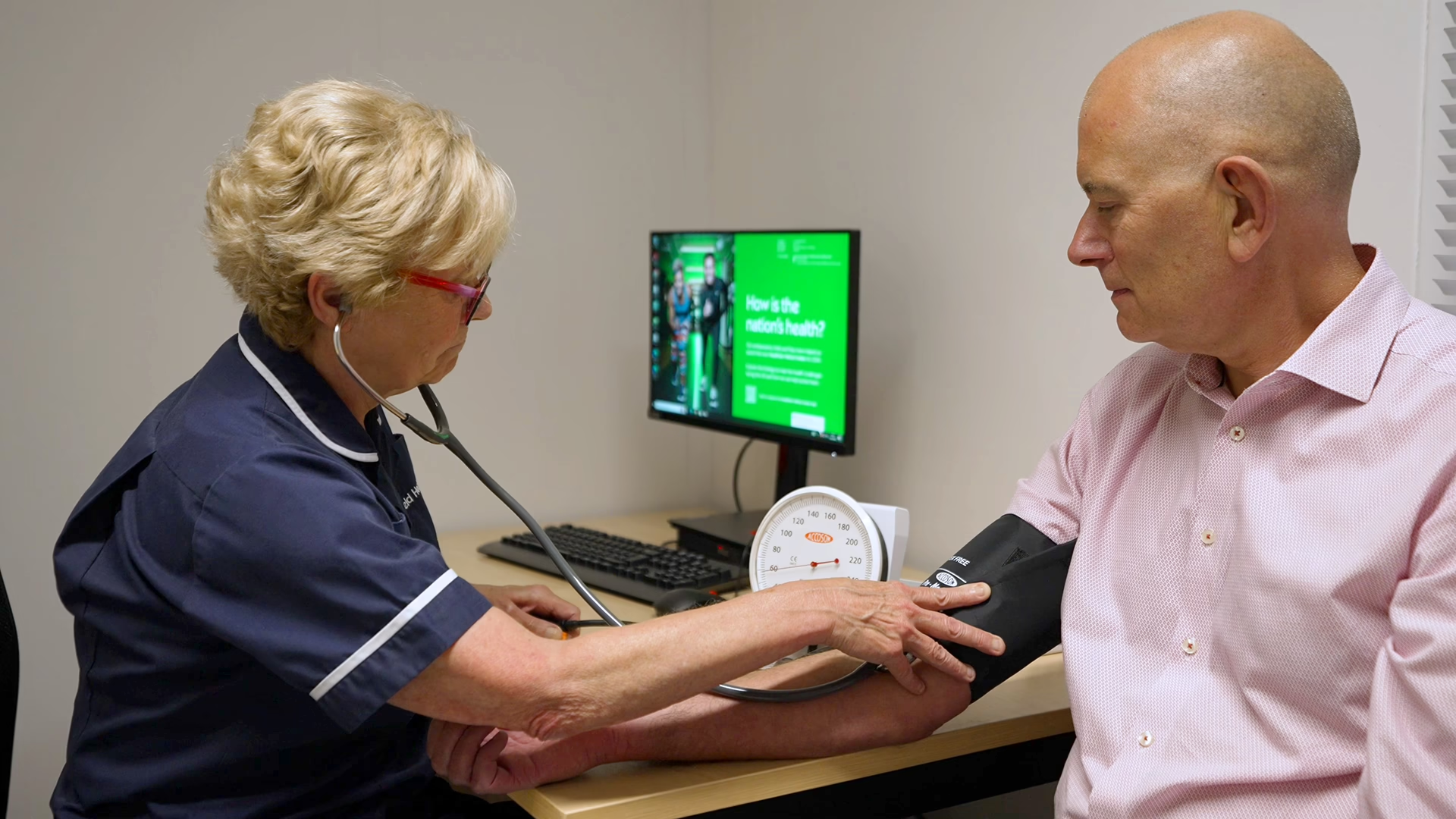
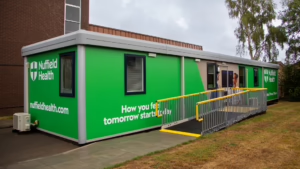
Relocatable facilities can provide the breathing room needed to maintain services while longer-term solutions are developed. Much like Godiva Group Practice, when a fire left them without access to seven consultation rooms. In response, they received a temporary modular facility within three weeks to enable the practice to continue serving patients whilst repairs were carried out.
Restore. Unlocking capacity where it’s needed most
One of the biggest challenges with renewing an operational healthcare estate is surprisingly simple. Where does everything go in the meantime?
Departments need somewhere to relocate while buildings are refurbished. Clinical services need to continue while infrastructure is upgraded. Waiting list recovery can’t simply stop because construction has started. And on many NHS sites, finding that space is proving to be more and more difficult. Sites are constrained or landlocked, with little room to create the short-term capacity needed to unlock wider redevelopment.
Building a permanent facility to solve a temporary problem doesn’t always make sense either.
This is where modular facilities can give organisations another option, creating capacity to allow estate renewal or repair to move forward without unnecessarily tying up land and capital in permanent assets.
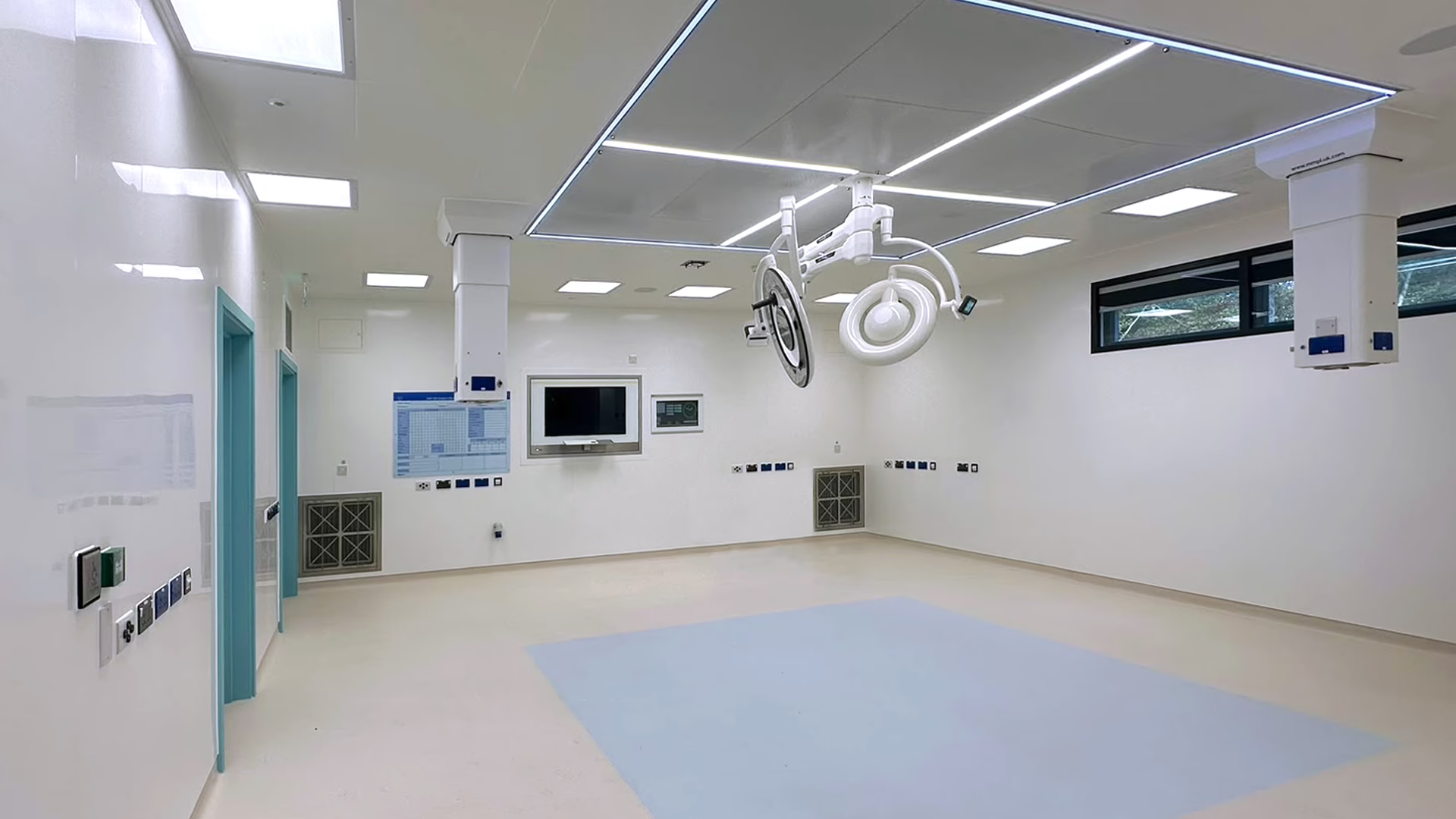
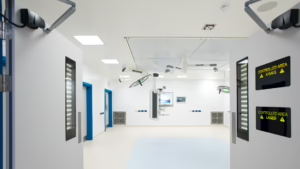
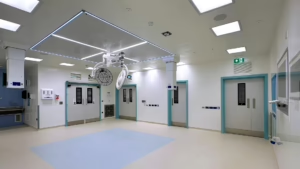
Operating theatres, clinical accommodation and temporary decant space can all be provided using modern methods of construction, maintaining activity while work takes place around them. Done well, that means estate improvement can happen sooner, with less disruption to services and better use of capital investment.
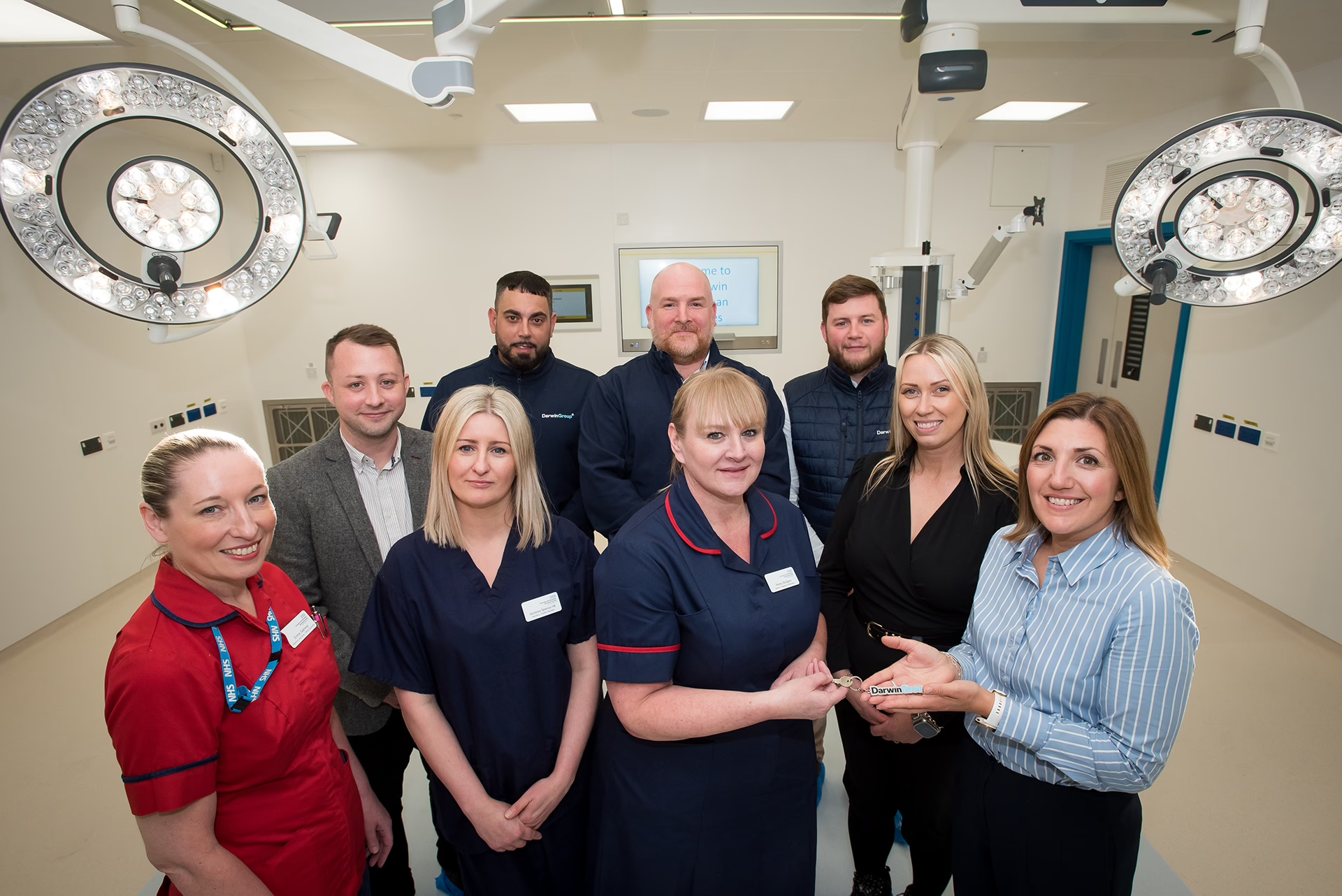
A great example of this is at Doncaster Royal Infirmary, where they opened a decant facility during the summer. Located next to their Women’s and Children’s Hospital, this permanent-grade yet temporary facility has been installed to maintain surgical services during vital refurbishment work within the main building.
Reimagine. Designing estates for the future
Perhaps the biggest opportunity within the Capital Plan isn’t simply replacing old buildings with new ones, but the opportunity to think differently about where and how healthcare is delivered.
The Government’s vision places greater emphasis on neighbourhood health services, community-based care, digitally enabled environments and facilities that improve productivity while supporting changing models of care. That demands a different approach to estate masterplanning.
We can’t assume that a healthcare building designed for one purpose today will still need to serve exactly the same purpose in ten or twenty years’ time. Services will change. Technology will change. Patient needs will change, and our estate needs to be able to change with them.
That’s where I see one of the biggest opportunities for modular construction.
Neighbourhood health centres, diagnostic hubs, elective facilities and outpatient services can all be delivered in adaptable spaces. These are facilities that can change use, expand, relocate or ultimately be removed as needs evolve.
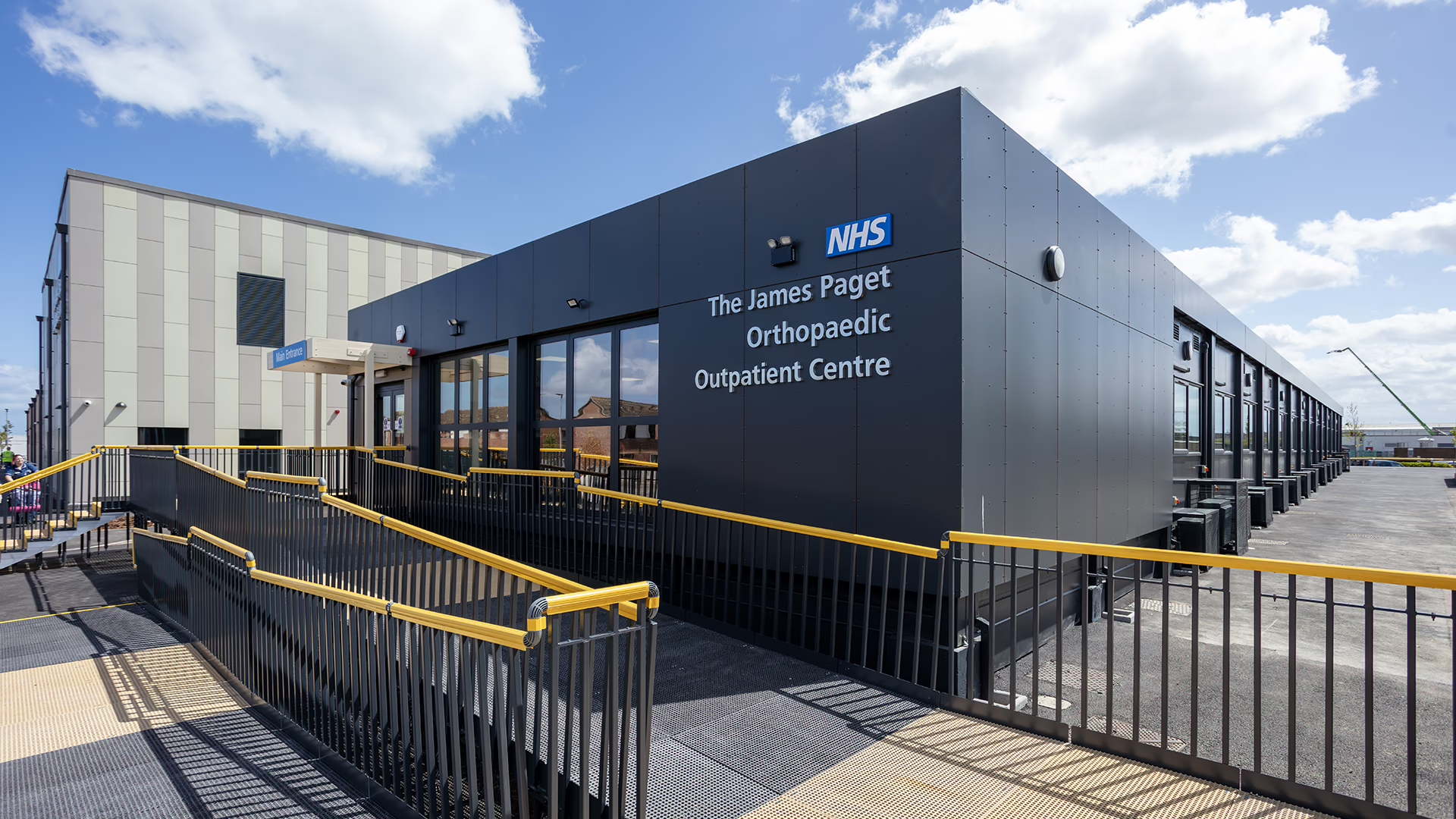
James Paget University Hospitals NHS Foundation Trust, which is in wave one of the New Hospital Programme, needed to reimagine parts of its estate to meet today’s service needs while the new hospital work continues. The trust moved their Orthopaedic Outpatient services to a new modular building to make space for a new SDEC. Now co-located alongside the Orthopaedic surgical hub, the new modular building gives them flexibility in how they manage their estate while the new hospital takes shape.
Enabling the NHS’ next decade of transformation
Delivering the Government’s vision will depend on more than capital investment alone. It will require healthcare organisations to maintain safe services during redevelopment, unlock capacity while ageing estates are repaired or renewed, and create adaptable environments capable of supporting new models of care for decades to come.
Backed by the strength, reach and capacity of Portakabin, Darwin Group the specialist healthcare business, partners with healthcare organisations at every stage of the estate journey, helping them to respond to immediate pressures, restore critical capacity and reimagine environments fit for the future.